Technology
From blueprint to toolpath: AI and CAD on the fabrication floor.
Design software and AI are fusing into a single workflow. A view from a shop that still fabricates from paper drawings older than its welders.
By Nautilus Industrial MarinePublished Updated
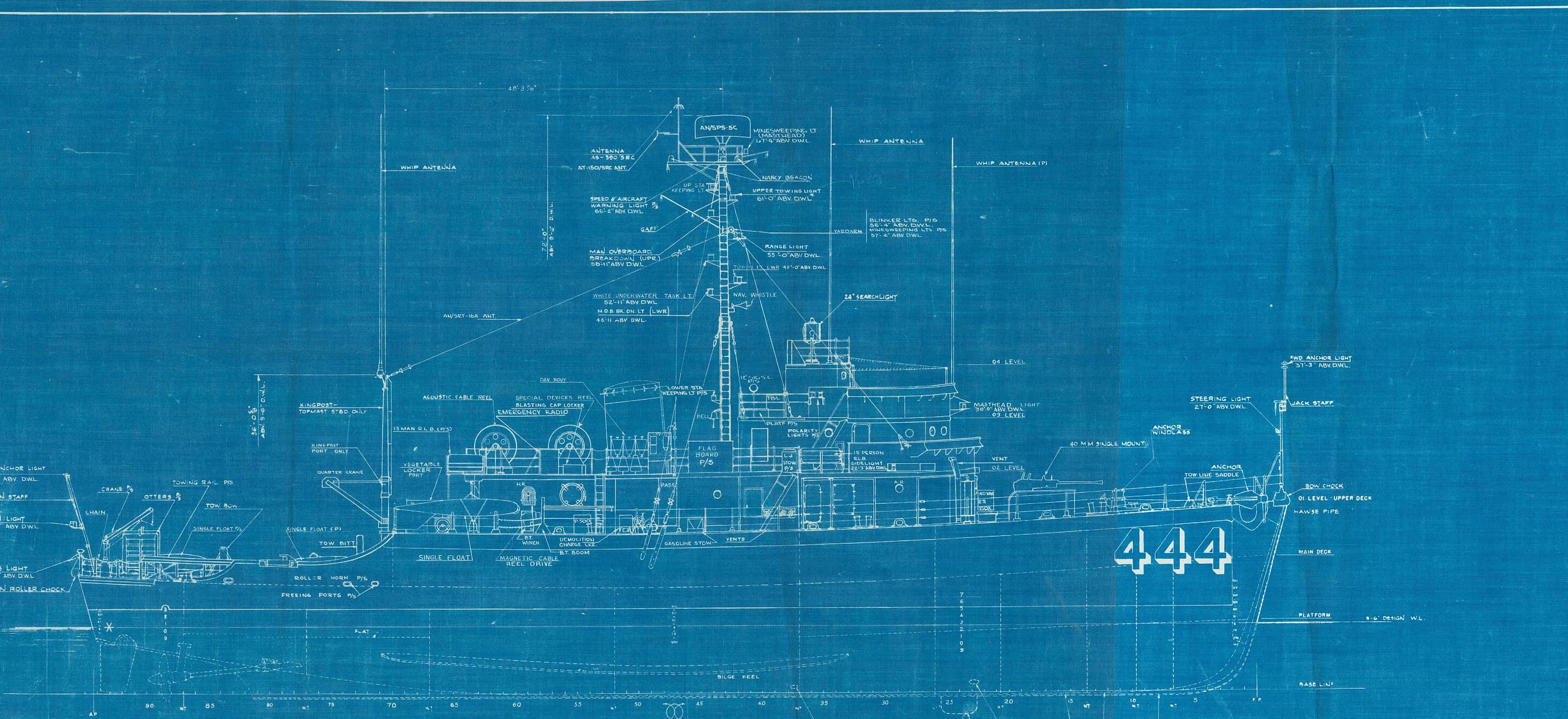
Half the vessels we touch were drawn before CAD existed. Their record is a booklet of general plans — beautiful blueprint sheets, hand-lettered, and frequently wrong, because fifty years of repairs never made it back onto the drawing. The other half arrive as solid models with every bracket resolved. A modern fabrication shop lives between those two worlds, and that's exactly where the new AI-infused CAD tools are most interesting.
The fusion happening in the workspace.
Scan-to-model is the one that matters most for repair work. Laser scanning an engine room or a hull section and letting software reconstruct the as-built geometry closes the gap between the 1970 drawing and the 2026 reality. When a replacement watertight door has to fit an opening that's been re-plated twice, measuring reality beats trusting paper.
Generative design — telling the software the loads, the envelope, and the material, and letting it propose the bracket — has moved from party trick to plausible. The proposals still need a fabricator's eye (some optimized shapes are unweldable in the real world, or impossible to inspect), but as a starting point for a mount or a foundation, it's a faster first draft than a blank screen.
Smarter CAM is the quiet win: AI-assisted nesting squeezes more parts out of a plate before the plasma torch ever fires, and better toolpaths mean less grinding after. Material saved and labor saved, with no change to how the metal is actually joined.
The drawing still gets stamped.
Here's the boundary we hold: AI can propose geometry, but it can't take responsibility. Structural work still goes through engineered, stamped drawings; marine work still answers to the surveyor and the Coast Guard; and the fabricator still owns fit-up. The software's job is to get us to a better drawing faster — the drawing's job is unchanged.
We used this exact philosophy on our electric amphibious design study: modern modeling and visualization to explore the concept quickly, with the engineering targets pinned to real standards — USCG Subchapter T, ABYC E-11 — that a human team signs for. Tools evolve. Accountability doesn't.